At your service in Chandler
Portable Backup Generator Installation Chandler AZ
- Permit paperwork handled for you
- HOA approval sorted before install
- Serving Chandler & Gilbert homes
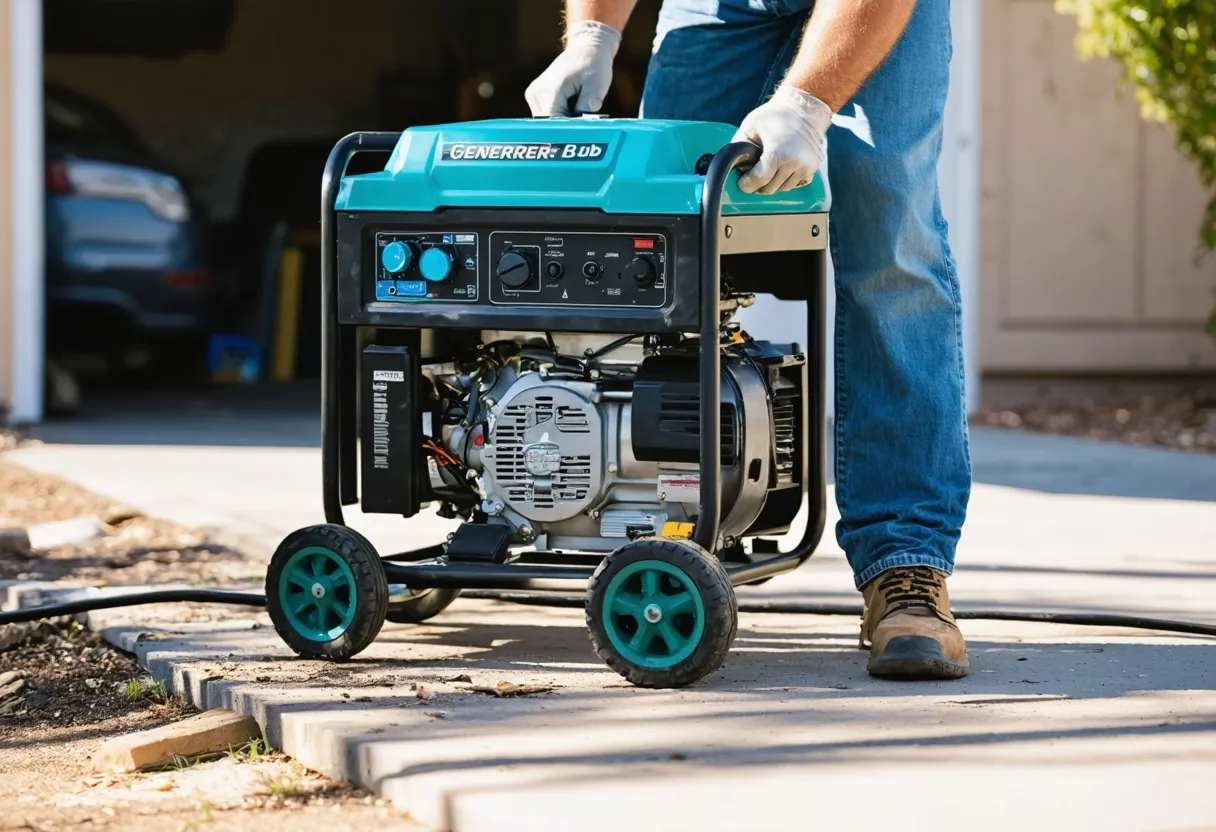
A portable generator that's still waiting on paperwork isn't backup power — it's a box sitting in the garage. In Chandler, the gap between owning a generator and legally running one through your electrical panel comes down to two separate approvals: a City of Chandler Generator Permit covering the inlet box, wiring, and transfer switch, and, for a large share of Chandler subdivisions, a homeowners association sign-off before that same inlet box ever goes up on an exterior wall. Neither approval is optional, and neither one moves on the other's schedule.
Along the Chandler-Gilbert corridor, that timing gap matters more than it would almost anywhere else in the Valley. Monsoon season brings the kind of microburst winds that put real, repeated stress on above-ground utility lines, and outages tend to cluster hard into a few summer months instead of spreading evenly across the year. A portable generator hookup that's still working through a permit resubmission, or sitting under an HOA violation notice in the middle of July, isn't backup power when the grid actually fails — it's an unfinished project with bad timing.
We treat the permit and the HOA review as one planning step instead of two separate hurdles to discover along the way. This page covers what that pre-cleared version of a portable generator installation actually looks like in Chandler — how the city permit and HOA process interact, what the physical hookup involves once both are settled, and what changes when the property in question is a small business rather than a house. For a small business, the same two-approval structure carries over almost unchanged, with a landlord or property-management sign-off standing in for an HOA — which is covered in detail further down this page.
What Happens Between Your Call and Your Inspection Sign-Off
We look at your existing panel's age, condition, and available capacity, then calculate which circuits your portable unit's real running and starting wattage can carry without tripping under load — not just the number printed on the generator's nameplate.
Before placement is finalized, we identify which HOA — or, near a jurisdiction boundary, which city — actually governs your address, and pull its architectural rules on inlet box location, screening, and visible conduit.
The permit covering the inlet box, conduit run, and transfer switch is submitted and has to clear city review before any physical installation work begins on site, not after.
We mount the inlet box in the location that's actually been cleared, run conduit and wiring, install a listed manual or automatic transfer switch, and complete grounding and bonding to code.
We're present for the city inspection to resolve anything flagged on the spot, then hand you the approved permit and inspection sign-off for your insurance, resale, and warranty records.
Six Signs Your Chandler Portable Generator Hookup Was Actually Done Right
Two Approvals, Two Different Questions
The City of Chandler Generator Permit and your HOA's architectural review aren't the same approval wearing two names — they're answering two different questions, on two different timelines, and mixing them up is where most stalled portable generator installations start.
The city permit asks: is it safe and code-compliant?
The permit covers the inlet box, the conduit run, and the transfer switch as fixed electrical equipment — even though the generator itself is only rolled out and connected during an actual outage. A city inspector checks grounding, bonding, wire sizing, and confirms the transfer switch is a listed device that physically prevents any back-feed onto utility lines. That inspection has to happen before the job is considered complete, not filed retroactively once the wiring is already closed up behind a cover plate.
The HOA review asks: does it belong where you put it?
Architectural review has nothing to do with electrical safety and everything to do with how the equipment reads from the street, a neighbor's yard, or a common area. Depending on the association, that can mean restrictions on which exterior wall carries the inlet box, a requirement to screen it behind landscaping or a fence panel, or rules about how visible a conduit run is allowed to be. There's no single Chandler-wide HOA standard — requirements are set association by association, and they sometimes differ from one section to the next inside the same master-planned community.
Why sequence matters more than either approval alone
Because the city and the HOA are checking completely different things, running them one after the other instead of together is usually what causes delay. An installer who files the permit first and only asks about HOA rules once equipment is already mounted is betting that the association won't object to the placement. When it does object, the fix is relocating hardware that's already wired and inspected — not a quick form resubmission. Checking both before a start date is ever set is what keeps a manual transfer switch installation in Chandler on a single timeline instead of two conflicting ones, and it's the single biggest reason a portable generator hookup either works the first time the power drops or spends outage season stuck in a paperwork dispute. It's a short conversation up front — confirming which HOA governs the address and whether the permit basics apply — that avoids weeks of delay figuring it out later, after equipment is already on the wall.
Portable Generator Installation Questions Chandler Owners Ask
Do I actually need a permit for something as simple as plugging in a portable generator?
Yes. Once an inlet box, wiring, and a transfer switch are added to connect a portable unit to your panel, that hardware counts as fixed electrical equipment under city code. The fact that the generator itself is portable and only connected during an outage doesn't exempt the hookup from permit and inspection requirements — the permit covers what's mounted and wired, not the appliance you roll out of the garage.
My HOA's CC&Rs don't mention generators at all — does that mean I'm clear?
Not necessarily. Many associations regulate exterior equipment, conduit, and visible utility hardware under general architectural rules rather than a generator-specific clause, so silence on the word 'generator' doesn't mean silence on where an inlet box or conduit run can go. We check the actual governing documents for your address rather than assuming a gap in the wording means no rules apply, since the rules that end up mattering are often written under a broader 'exterior equipment' section.
Should I install a manual or automatic transfer switch?
A manual transfer switch is the standard, lower-cost option for a portable hookup and requires you to switch circuits over yourself at the panel when the power goes out. Automatic switching senses an outage and transfers power without anyone present, which matters more if the property is often unattended when outages hit. Either option still needs to be a listed device covered under the same city permit and HOA check.
Can I get the inlet box installed now and sort out the permit later?
No. The permit for the transfer equipment is reviewed before installation work begins, not filed after the wiring is already run and covered behind a wall or panel cover. Installing first and permitting after leaves you with electrical work that no inspector has actually verified.
I already mounted an inlet box without checking HOA rules — what happens now?
That's a fixable but costly situation. Associations can issue a violation notice and require relocation of equipment that's already installed and wired, which means redoing conduit and mounting work that a placement check up front would have avoided entirely.
Does a small business need to go through the same process as a house?
Yes — the same City of Chandler Generator Permit rules apply to a commercial hookup, and many leased or managed commercial properties add a landlord or property-management sign-off on top of it, functionally similar to an HOA review in what it checks and when it needs to happen relative to the physical install.
Cleared Before It's Ever Scheduled
Every installation date on our schedule has already cleared both the City of Chandler Generator Permit review and your HOA's architectural rules. A scheduled start means a start that can actually finish — not one that stalls once paperwork catches up mid-project.
Small Business Backup Power and Coverage Across the Chandler-Gilbert Corridor
A small business running a portable backup generator hookup in Chandler works under the same City of Chandler Generator Permit rules as a house, but the load side of the job usually looks different. Commercial panels typically carry more circuits and a higher combined draw than a residential panel, which changes the load calculation and, sometimes, the size of transfer switch needed to keep point-of-sale terminals, refrigeration units, security systems, or server equipment running through an outage — rather than only the handful of circuits a home would prioritize.
Commercial properties also frequently layer a second approval on top of the city permit: a landlord sign-off for a leased space, or a property-management review for a shared commercial lot. It checks similar ground to an HOA review — where equipment can sit, how visible conduit is allowed to be — and we confirm whether that applies to your lease or ownership situation before finalizing a design, the same way we check a residential HOA's rules before mounting anything. It's a small amount of upfront coordination compared to the alternative — hardware installed and wired only to be relocated later because a lease or association rule wasn't checked first.
Where we work across the corridor
We install portable backup generator hookups across Chandler, including the 85286, 85249, 85248, 85226, 85225, and 85224 zip codes, and into neighboring Gilbert, AZ. Properties sitting near a jurisdiction boundary, or inside a Gilbert subdivision with its own architectural committee, get the same pre-clearance treatment: we confirm which permit office and which HOA or property-management body actually governs the address before a design is finalized, rather than assuming Chandler's process automatically carries across the line.
Timing across this corridor isn't evenly distributed through the year. Outage risk spikes hard during monsoon season, when microburst winds put genuine, repeated strain on the above-ground utility infrastructure serving both Chandler and Gilbert. Getting the permit filed, the HOA or property-management approval cleared, and a manual transfer switch installed before those months start is the difference between a generator that's ready the first time the power actually drops and one that's still working through paperwork while the storm has already come and gone. Whether you're planning a hookup for a Chandler home or a small business anywhere in the corridor, settling the permit-and-HOA question first is what keeps everything after it moving on schedule.
Get Your Free Quote
Tell us about your property and we'll lay out the permit, HOA, and install plan — no obligation.
Ready to Get Cleared for Installation?
Start with a free quote and we'll map the permit and HOA steps specific to your property.