At your service in Chandler
Transfer Switch Installation Chandler
- Permit paperwork handled for you
- HOA approval sorted before install
- Serving Chandler & Gilbert homes
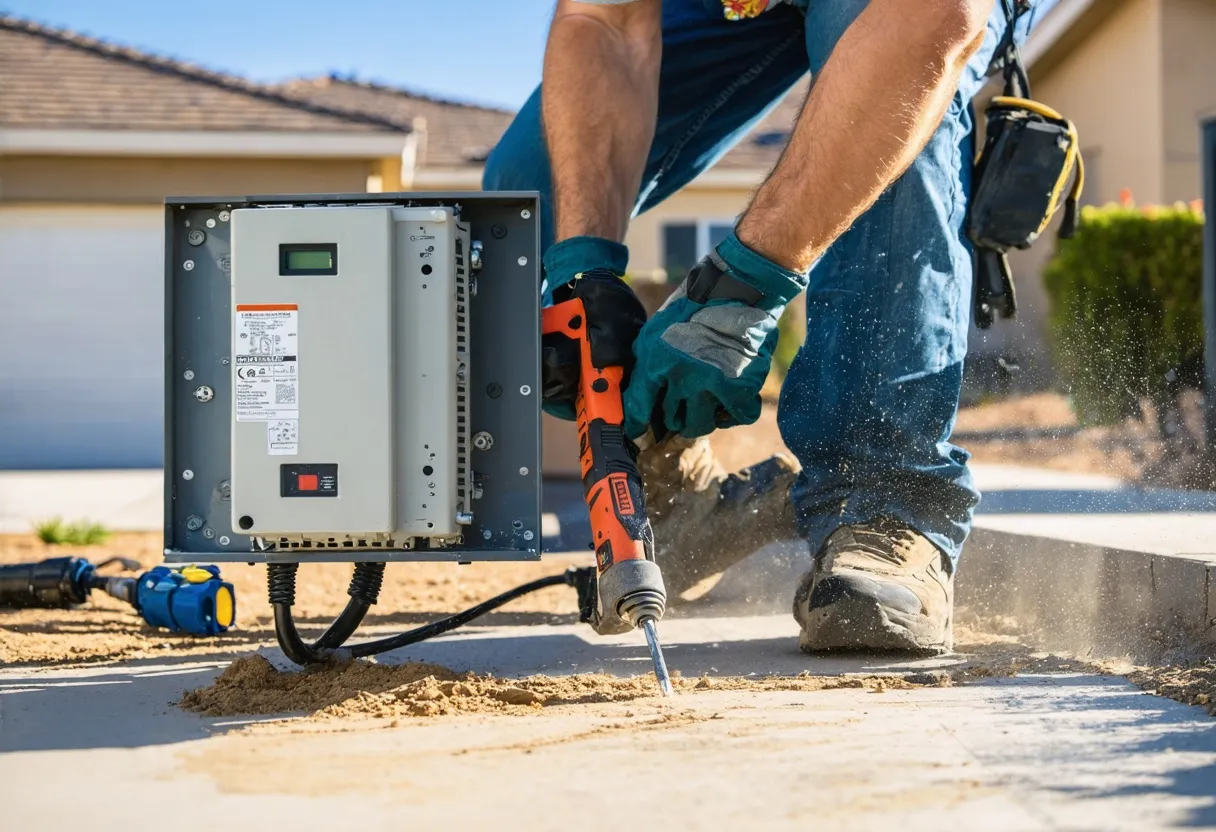
A transfer switch is a small box that decides one thing, over and over, for as long as you own your home: whether your circuits are drawing from the utility grid or from a running generator, and never both at once. In Chandler, getting that box installed correctly is only half the job. The city requires a Generator Permit before the switch is energized, and most Chandler subdivisions layer an HOA architectural review on top of that — a second approval that has nothing to do with electrical code and everything to do with where the equipment physically sits on your lot. Homeowners who treat the switch as a pure hardware purchase are usually the ones who call us mid-monsoon-season asking why a finished installation still isn't turned on.
This page is specifically about transfer switch installation in Chandler — automatic and manual options, the backfeeding prevention that makes either one safe, and the permit-and-HOA sequence that determines whether your switch is live before the next Chandler-Gilbert outage or sitting in a review queue while it happens.
Automatic or Manual: What Actually Fits Your Panel
The transfer switch exists to solve a single hazard: backfeeding, where a generator pushes power out through your panel and onto the utility line at the same moment a lineworker may be treating that line as dead. Every code-compliant generator wiring job in Chandler is built around eliminating that possibility, and the switch is the mechanism that does it — either mechanically or electrically interlocking grid and generator power so the two can never be connected simultaneously.
Automatic transfer switches
An automatic transfer switch (ATS) monitors utility voltage continuously. When it senses an outage, it signals the generator to start and moves your load over on its own — no one has to be awake, home, or standing at the panel. For Chandler's monsoon corridor, where dust-storm outages tend to arrive overnight or during weather nobody wants to walk through, this is the default most whole-home standby owners choose, and it's the configuration we install and permit most often.
Manual transfer switches
A manual switch is a legitimate, lower-cost option for a defined set of essential circuits — refrigerator, a few outlets, well pump if you have one — but it requires a person on-site to physically throw the switch when the power drops and again when it returns. That's a reasonable tradeoff for some households and a poor fit for others, particularly if the property sits empty for stretches during the year.
Whichever type you choose, an automatic transfer switch in Chandler or a manual one is only as good as the load calculation behind it. We size the switch to your panel's actual amperage and circuit demand rather than defaulting to a generic spec, because that sizing — not the switch's brand or price point — is what a Chandler city inspector is checking when they sign off on the permit.
What Backfeeding Prevention Actually Looks Like on Paper
How We Sequence a Transfer Switch Installation Through Chandler's Permit Process
We evaluate your existing panel, service size, and intended coverage — whole-home or a defined set of essential circuits — before specifying a switch.
The city application and the HOA architectural review, where one applies, go in on the same timeline so neither approval sits waiting on the other.
The switch is mounted and wired with the interlock in place from the first connection, so backfeeding prevention is built into the job rather than checked afterward.
We run a simulated outage and restoration cycle ourselves before the city inspector arrives, so the visit confirms a system that's already proven to work.
You receive the closed permit, inspection record, and a plain-language explanation of how the switch behaves the next time the grid actually drops.
Monsoon Season Doesn't Reschedule Around an HOA Meeting
Committee review cycles and city permit queues move at their own pace regardless of how the sky looks that week. Filing before Chandler-Gilbert's outage season peaks — not after the first storm knocks the power out — is the only way to have a transfer switch that's actually inspected and live when you need it.
Transfer Switch Questions Chandler Homeowners Ask
No — in Chandler, the transfer switch is reviewed under the same city Generator Permit as the standby unit, since the inspector is evaluating the two as one interconnected system. We confirm this scope on every application so nothing is filed twice or missed.
Usually yes, but it's treated as its own permit review because you're changing how the home interconnects with backup power, not just swapping a part. We check your existing wiring can support automatic switching before filing anything.
That's a normal part of the process, not a dead end. Boards commonly ask for a different placement, added screening, or revised paperwork, and we handle the resubmission directly rather than leaving a homeowner to negotiate it alone.
They confirm the interlock physically or electrically prevents grid and generator power from being live on the same circuit at once, then check that wiring, breaker sizing, and grounding match the equipment that was actually installed.
The on-site labor is usually shorter, but the permit and HOA review timeline is largely the same either way, which is why we start that paperwork immediately instead of waiting until the physical work is scheduled.
The Chandler Neighborhoods and HOA Boards Behind This Process
Approval requirements for a transfer switch aren't identical across Chandler. We work across the 85286, 85249, 85248, 85226, 85225, and 85224 zip codes, plus nearby Gilbert — and that footprint means we've already been through architectural review with a number of the HOA boards in those areas, not just the city permit office.
That familiarity has a practical payoff: knowing which board wants a landscaping screening plan versus a simple placement diagram, and which meets on a monthly cycle versus a rolling review, shortens the approval timeline compared with a contractor filing in that community for the first time. If you're weighing a full standby system rather than a standalone switch, that's a separate scope covered on our whole-home generator installation page, and the dual-approval process itself is broken down in more depth on our generator permit and HOA approval guide. For this page's scope — the switch, the interlock, and the wiring around it — reach out to get your Chandler Generator Permit and any HOA paperwork moving before the next monsoon outage.
Get Your Free Quote
Tell us about your property and we'll lay out the permit, HOA, and install plan — no obligation.
Ready to Get Cleared for Installation?
Start with a free quote and we'll map the permit and HOA steps specific to your property.